Overview
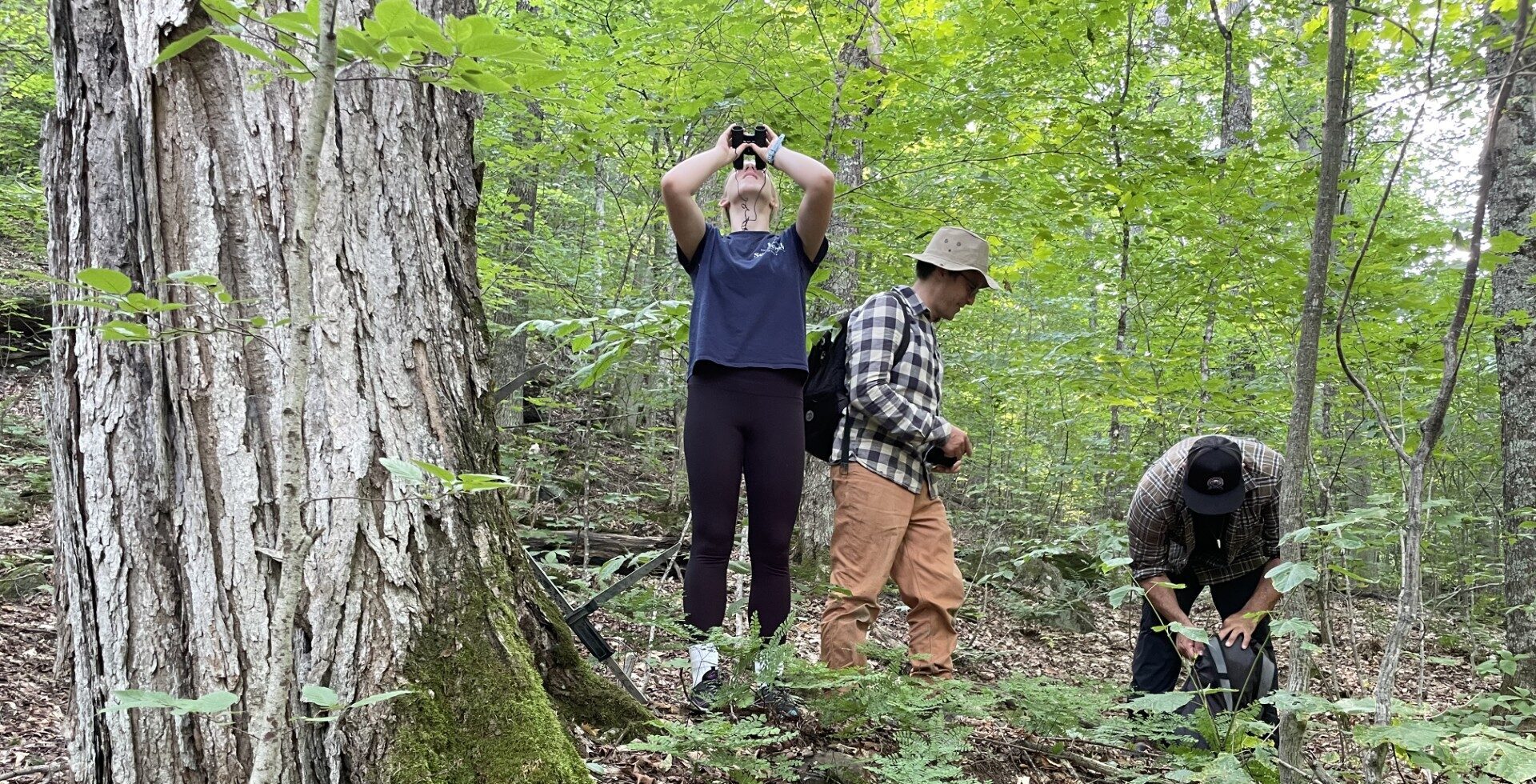
CPAWS-OV is developing a field-based approach to be able to identify old-growth forests in the Outaouais Hills and southwestern Laurentian mountains. We are combining cartographic analysis with on-the-ground ecological surveys, in order to identify new areas of protection. This work aims to align with provincial criteria for what constitutes an old-growth forest — a designation that carries both ecological and cultural significance.
The forest tracts we’re finding are relatively modest in size, typically ranging from 100 to 200 hectares. While much of Québec’s forest landscape has undergone at least one cycle of industrial harvesting — and in many regions, a second — certain pockets have been spared. These areas were often left due to challenging topography, limited accessibility, or low commercial value, and are now rare fragments of pre-industrial forest conditions.
Most of the forest sites we’re working to protect are within a temperate deciduous forest region recognized for its unique biodiversity, complex food web, and ecological resilience. These forests are dominated by long-lived, shade-tolerant species such as sugar maple, yellow birch, beech and hemlock, which under optimal conditions, can attain ages of 300 to 400 years.
Why old growth forests?
The ecological integrity of these stands and their ability to sustain untold amounts of life is reflected in their structural features: multi-aged canopy layers, large-diameter snags and logs, and a rich layer of coarse woody debris that supports diverse invertebrate communities. These microhabitats are particularly attractive to salamander and tree frog populations, as well as orb-weaving spiders and rove beetles who rely on the abundance of arthropod decomposers — such as springtails, mites, and beetle larvae — for sustenance. From branches covered in lichens to the depths of an earth filled with a densely knit mycelial network, these forests are imbued with life and are even safe havens for climate change, often being several degrees cooler than their second generation counterparts.
Walking through old growth forests is a humbling and profound experience. The towering trees evoke a sense of timelessness and wonder. It’s easy to imagine how Indigenous communities, who have stewarded these lands for millennia, would have drawn wisdom and sustenance from these ecosystems. Today, these rare forests offer not only ecological and scientific value, but also a chance to ground ourselves in a deeper sense of place and belonging.
We need your help! A guide to identifying old growth forests.
Despite what you might think, old growth forests can sometimes be surprisingly close to civilization. For example, we’ve found one near Lake Tucker in the Poisson Blanc region. If you know of a tract of public land over 50 hectares, composed primarily of sugar maple or yellow birch — or even eastern hemlock which is another long-lived species that sometimes escapes harvesting — we’d love to hear from you.
We’re especially interested in sites that show the following characteristics:
- Tall crowns and trunks free of branches over a significant height
- Crown shapes resembling antlers or other unusual forms, with large twisted branches growing perpendicular to the trunk
- Leaning trees, often with moss and lichens on the bark, and trunks showing buttresses, fluting, or rope-like textures that compensate for the tilt
- An irregular forest floor with pits and mounds created by fallen and uprooted trees.
These features are typical of old-growth forests and may indicate areas that have escaped logging or other disturbances. Your local knowledge could help us protect these rare and ecologically valuable ecosystems.
If you think you might have spotted an area of interest, contact Andrew at:agibson@cpaws.org