What is considered a protected area?
With the launch of the new Force of Nature strategy, people are focusing on the 30% by 2030 promise, excited to witness the creation of new protected areas in a time of biodiversity loss and climate crisis, after all, Canada is known for its rich and diverse wilderness landscape!
But what exactly are “protected areas” in this context? Surely it means these selected portions of land and waters are to be left intact? And have legal protections in place to prevent future extraction or destruction? At CPAWS-OV we certainly think they should!
A quick look into the new strategy shows that most of the new protected areas are to be Other Effective Area-Based Conservation Methods (O.E.C.Ms) with little to no mention of biodiversity reserves. But what’s the difference? With so many different designations and definitions, it can be hard to fully understand how our land is being managed and what protections our precious natural resources actually have.
Let’s take a closer look.
What is being included in the 30% by 2030?
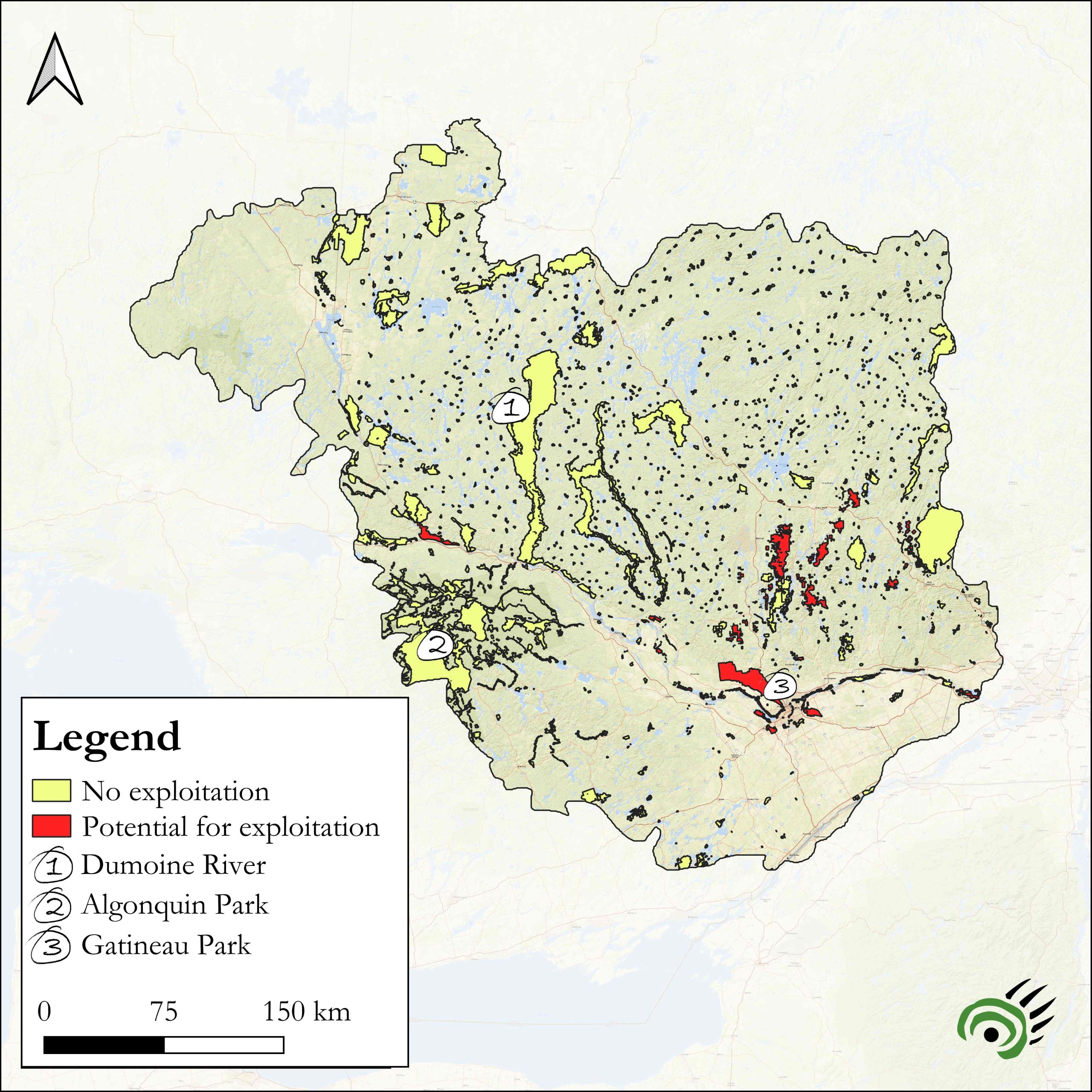
Upon closer inspection, we find this map problematic as there are certain key areas which have been included but which have no legal protections whatsoever, including the Gatineau Park and parts of the National Capital Greenbelt.
Do you believe they should then be counted towards the 30% ? Neither does the International Union for Conservation of Nature (IUCN).
The official definition of a protected area according to the IUCN is: “a clearly defined geographical space, recognised, dedicated and managed, through legal or other effective means, to achieve the long term conservation of nature with associated ecosystem services and cultural values.
This map shows a more accurate picture of current protected areas in the Ottawa River watershed as per international guidelines.
What SHOULD a protected area be?
At CPAWS-OV, we believe a protected area should be exactly what people would expect it to be, a legally protected and clearly defined portion of land set aside for nature to thrive.
That is why we have put together the following in-depth definition:
A protected area is a clearly defined geographical space, recognized, dedicated, and managed through legal or other effective means, with the objective of ensuring the long-term conservation of nature, ecosystem services, and associated cultural values.
Its purpose is to maintain the composition, structure, ecological functions, evolutionary potential of biodiversity, and cultural heritage at the level of species, habitats, ecosystems, and landscapes. Its size and configuration must ensure ecological integrity and the long-term maintenance of conservation targets.
A protected area is managed according to a structured plan, supported by a monitoring and evaluation program that promotes adaptive and locally grounded management, and is based on clear, equitable, inclusive, and effective governance. It follows the values and intentions of Indigenous communities inhabiting the territory and aims to permanently preserve the reasons for which it was established, including ecological, geomorphological, landscape, and cultural features.
It may provide essential ecosystem services, particularly by contributing to climate regulation and resilience to climate change. It may also generate benefits for local communities, offer recreational opportunities compatible with its objectives, support low-impact scientific research, and promote education as well as public support for conservation.
A protected area excludes any form of industrial resource exploitation. When a sustainable use of natural resources is permitted, it must be carried out in a manner consistent with the conservation objectives of the protected area, and only when conservation and sustainable use are mutually beneficial.
Tell Mark Carney to put his money where his mouth is.
Give the Gatineau Park and the NCR Greenbelt real legal protections!
Designations and resources
Navigating the different designations and their definitions can be challenging! Here is a list of the main ones you will come across with links to know more.
Federal:
National Urban Parks (NUP)
National Wildlife Areas (NWAs)