Events, News
September 3, 2026
Let’s make it a REAL park!
We’re nearly there! We are so close to getting real legislative protection for the Gatineau Park but we need your...
Read moreDo a bunch of stuff to stay on top of this file.
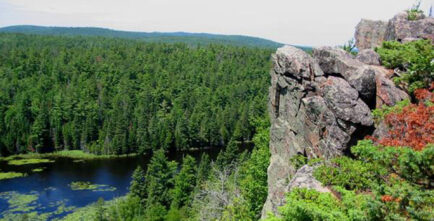
Stretching across more than 361 square kilometres of rich and diverse habitats, the Gatineau Park is one of the largest and most ecologically important parks in the Ottawa Valley.
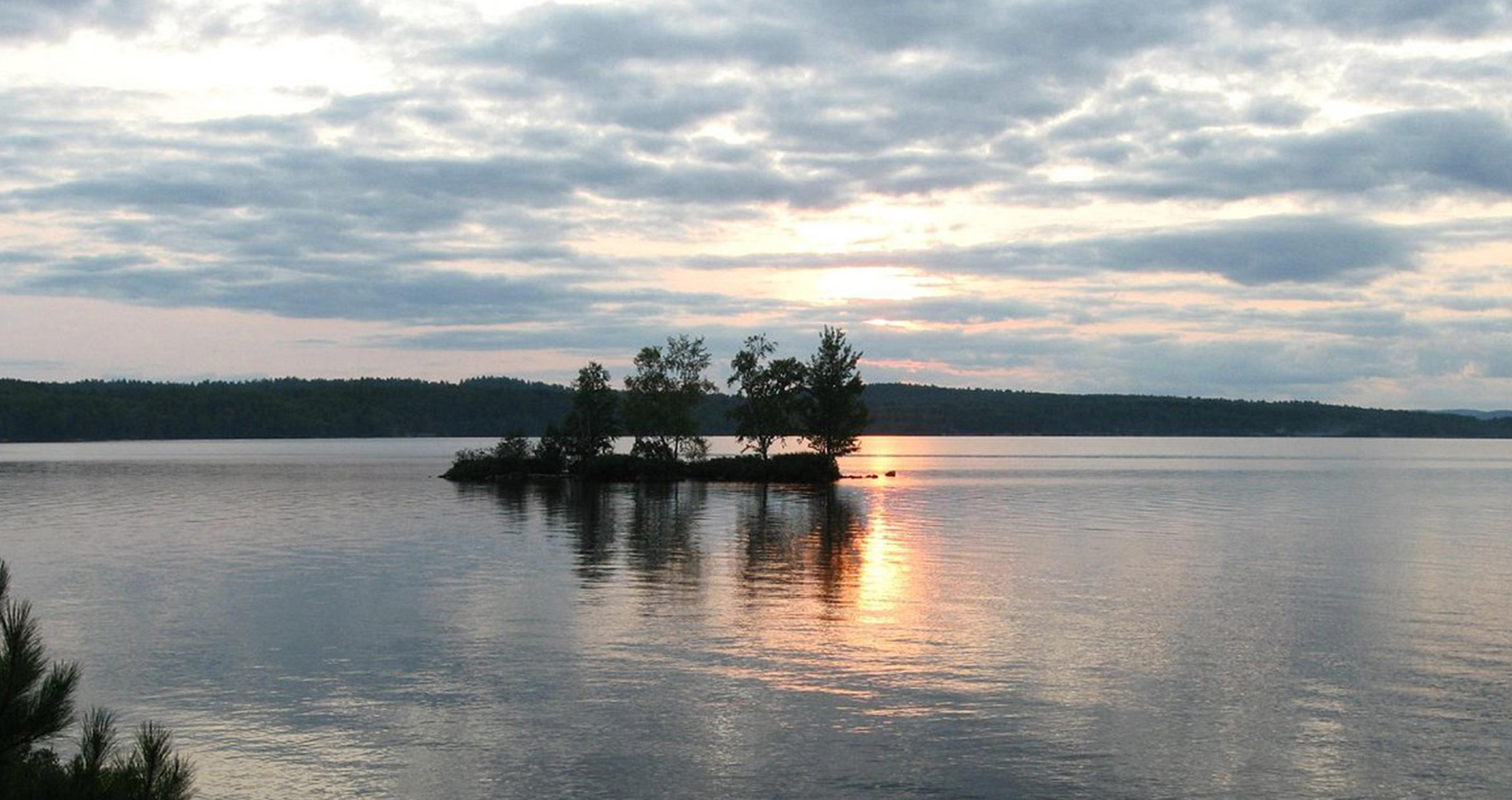
The Gatineau Park provides habitats for 27% of all plant and vertebrate animals found in Canada, and more than 40% of those found in Quebec and Ontario. These species depend on protected biodiversity to survive long-term.
On June 10, Senator Roas Galvez (Bedford) and Sophie Chatel, Member of Parliament for Pontiac-Kitigan Zibi announced the re-introduction of Senate Bill S-229 An Act to Amend the National Capital Act (Gatineau Park) to grant Gatineau Park the protections it derseves to ensure its long-term survival. When passed, the Bill will recognize the boundaries of the park in an act of Parliament for the first time ever and will ensure that the maintenance and restoration of ecological integrity are the overriding management priorities for the park – as is the case for our national parks and most provincial parks in Canada.
You can follow the Bill’s progress on the Senate of Canada’s website at: https://www.parl.ca/DocumentViewer/en/45-1/bill/S-229/first-reading
What can you do? Consider sending a message to Senator Galvez and MP Chatel to congratulate them on their leadership in protecting Gatineau Park and to let them know the protection of Gatineau Park is important to you, your group or community.
What can you do? Consider sending a message to Senator Galvez and MP Chatel to congratulate them on their leadership in protecting Gatineau Park and to let them know the protection of Gatineau Park is important to you, your group or community.
What can you do? Consider sending a message to Senator Galvez and MP Chatel to congratulate them on their leadership in protecting Gatineau Park and to let them know the protection of Gatineau Park is important to you.
We’re nearly there! We are so close to getting real legislative protection for the Gatineau Park but we need your...
Read more
It’s back! After the success of last year’s inaugural Ottawa Outdoor Film Festival, we are bringing you a new chance...
Read more
The Canadian Parks and Wilderness Society, Ottawa Valley Chapter (CPAWS-OV) brought a wide variety of stakeholders together at the Museum of Nature on Saturday the 21st of February to...
Read more
Thanks to the Canadian Summer Jobs program, we are looking for 2 students between the ages of 15 and 30...
Read more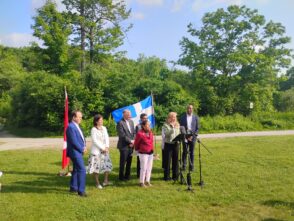
Senator Rosa Galvez and Member of Parliament for Pontiac-Kitigan Zibi, Sophie Chatel, Introduce Bill S-229 – An Act to amend...
Read more
With this information, we can then create a detailed map, identifying patterns and hotspots where mitigation measures could help wildlife travel safely and limit mortality rates.
As part of the campaign to protect this crucial ecological corridor, we are conducting a road ecology study along Highway 17 to identify problem areas with high wildlife mortality and propose solutions for safer movement throughout the territory. To collect vital data for the study, CPAWS-OV staff and local volunteers are conducting road surveys each summer from 2025 to 2027 along a 41-km section of Highway 17 and recording their observations of all signs of wildlife, whether they are found alive, injured or having sadly died, on or near the road.
With this information, we can then create a detailed map, identifying patterns and hotspots where mitigation measures could help wildlife travel safely and limit mortality rates.
As part of the campaign to protect this crucial ecological corridor, we are conducting a road ecology study along Highway 17 to identify problem areas with high wildlife mortality and propose solutions for safer movement throughout the territory. To collect vital data for the study, CPAWS-OV staff and local volunteers are conducting road surveys each summer from 2025 to 2027 along a 41-km section of Highway 17 and recording their observations of all signs of wildlife, whether they are found alive, injured or having sadly died, on or near the road.
With this information, we can then create a detailed map, identifying patterns and hotspots where mitigation measures could help wildlife travel safely and limit mortality rates.

With this information, we can then create a detailed map, identifying patterns and hotspots where mitigation measures could help wildlife travel safely and limit mortality rates.

As part of the campaign to protect this crucial ecological corridor, we are conducting a road ecology study along Highway 17 to identify problem areas with high wildlife mortality and propose solutions for safer movement.
Highway 17 to identify problem areas with high wildlife mortality and propose solutions for safer movement.